
Weight Loss That Treats the Root Cause. Not the Symptom.
Most weight loss programs count calories. Our integrative medicine approach at Sleep and Wellness Medical Associates in Princeton NJ asks a different question: why is your body holding onto weight in the first place?
Hormonal imbalances, sleep disorders, thyroid dysfunction, insulin resistance and gut health issues all drive weight gain — and none of them respond to diet and willpower alone. Dr. Mahmood Siddique, quadruple board-certified physician, addresses all of them.
- Hormonal and metabolic root cause testing
- Sleep medicine integrated with weight loss
- Functional and conventional medicine combined
- Physician-supervised — Dr. Siddique DO
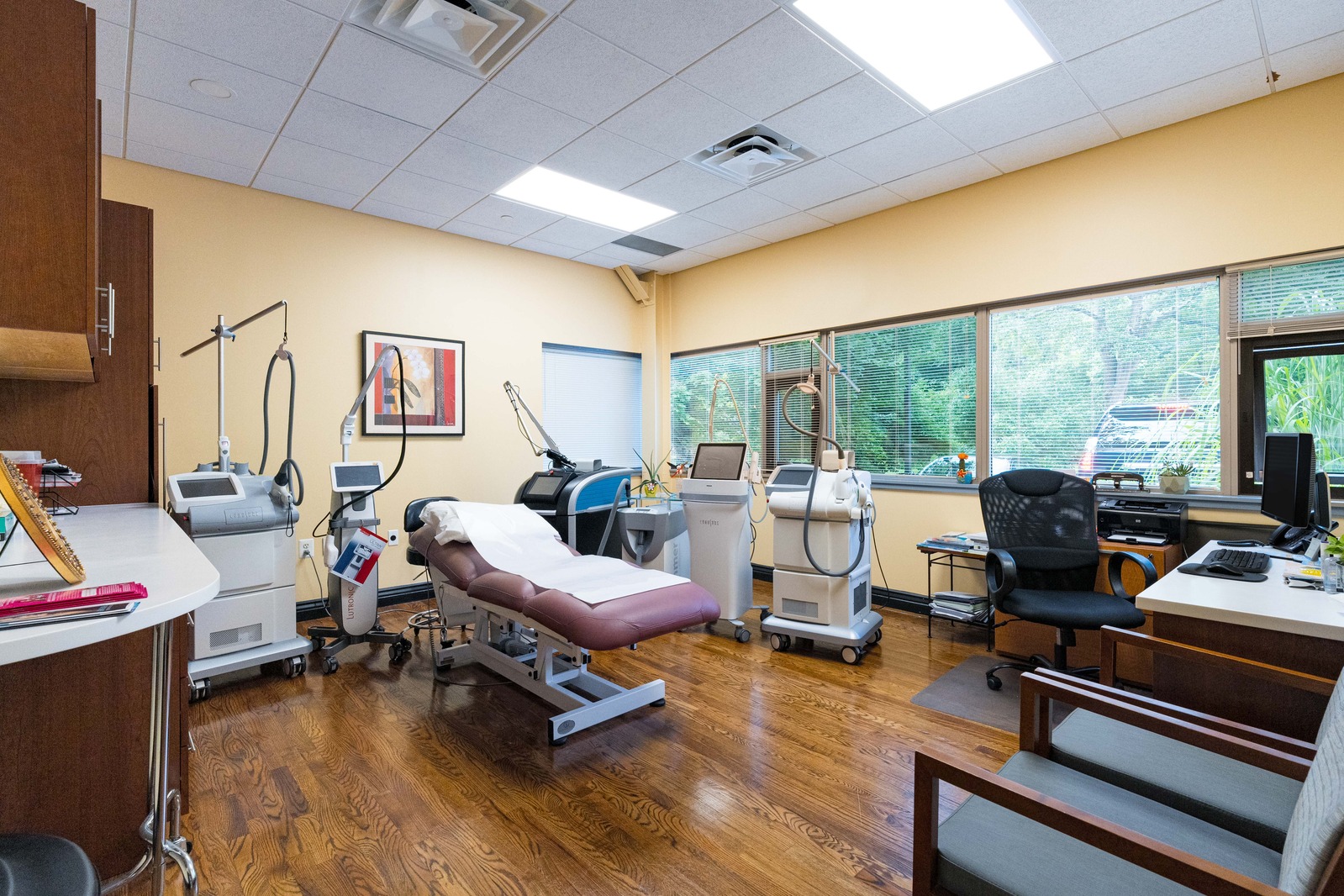
Hormones, sleep, gut and metabolism
Internal Medicine, Pulmonary, Critical Care and Sleep Medicine
Princeton NJ physician-supervised care
5.0 rating · Sleep and Wellness
Your Body Is Not a Calorie Calculator.
Research consistently shows that calorie restriction alone produces short-term weight loss followed by weight regain in the majority of patients. The reason is not a lack of willpower — it is that the biological factors driving weight gain are never addressed.
The evidence is clear: sleep deprivation increases ghrelin (the hunger hormone) and decreases leptin (the satiety hormone), driving cravings for calorie-dense foods and making weight loss biologically harder. A long-term study published in the American Journal of Epidemiology found that women sleeping five hours or less gained significantly more weight over 16 years compared to those sleeping seven hours.
Subclinical thyroid dysfunction can meaningfully slow metabolism — yet conventional screening often misses early cases. Insulin resistance exists on a spectrum and is more common than standard screening reveals, and it directly causes fat storage. Chronic inflammation makes weight loss physiologically difficult regardless of diet or exercise.
An integrative medicine approach identifies and addresses these root causes first. Weight loss then becomes a natural consequence of a body that is finally functioning correctly.
Six Biological Factors That Drive Weight Gain in Princeton NJ Patients
Dr. Siddique evaluates each of these factors at your initial consultation. Advanced diagnostics — not standard annual physical tests — are used to identify what is actually driving your weight.
Sleep Disorders
Hormonal Imbalances
Estrogen, progesterone, testosterone and cortisol all directly influence where the body stores fat and how readily it burns it. Perimenopausal and menopausal weight gain is often driven by hormonal shifts that no amount of calorie restriction can overcome without addressing the underlying hormonal picture.
Thyroid Dysfunction
Subclinical hypothyroidism — below the threshold for standard diagnosis — can meaningfully slow metabolism. Advanced thyroid panels including Free T3, Free T4 and thyroid antibodies reveal dysfunction that standard TSH testing alone frequently misses.
Insulin Resistance
When cells resist insulin’s signal, the body stores more fat and burns less. Insulin resistance exists on a spectrum — patients with normal fasting glucose can still have significant insulin resistance detectable through advanced metabolic testing.
Chronic Inflammation
Systemic inflammation directly interferes with fat metabolism and makes weight loss physiologically difficult. Gut dysbiosis, food sensitivities, environmental toxins and chronic stress are common drivers of inflammation that functional testing can identify.
Gut Microbiome Imbalance
The Factor Most Princeton Weight Loss Clinics Can't Address.
Dr. Siddique’s quadruple board certification includes Sleep Medicine — a credential no competitor in Princeton holds alongside Internal Medicine, Pulmonary Disease and Critical Care.
The clinical evidence linking sleep and weight is substantial. Clinical research has linked sleep restriction with insulin resistance, increased evening cortisol, elevated ghrelin and decreased leptin — creating the precise hormonal environment that drives fat storage and hunger.
Untreated sleep apnea, a condition Dr. Siddique diagnoses and manages directly, has been consistently linked with metabolic dysfunction and weight gain. Treating sleep disorders is therefore not separate from treating obesity — it is central to it.
A telehealth GLP-1 service cannot address sleep medicine. A single-specialty weight loss clinic cannot either. Dr. Siddique’s unique clinical background allows him to treat both conditions simultaneously in one practice.
Hours of sleep recommended for healthy adults — NIH guidelines
The Integrative Medicine Weight Loss Process
Every patient at Sleep and Wellness Medical Associates begins with a comprehensive evaluation — not a consultation that ends with a prescription.
In-house lab work including full metabolic panel, thyroid function (TSH, Free T3, Free T4), hormone levels, inflammatory markers, and insulin sensitivity testing. InBody 970S body composition scan to establish your precise baseline.
Dr. Siddique reviews your lab results and InBody data to identify the specific biological factors driving your weight. Sleep assessment included for all patients.
A treatment plan built around your specific results — which may include GLP-1 medication, hormone therapy, nutritional protocols, sleep treatment and AccuFit muscle stimulation.
Regular InBody 970S scans and physician follow-ups track your progress in precise clinical detail. Your plan adapts as your body responds.
InBody 970S
Medical-grade body composition analysis. Measures fat mass, muscle mass, visceral fat, metabolic rate and total body water in 45 seconds.
GLP-1 Medications
Semaglutide, Tirzepatide, Wegovy, Mounjaro and Zepbound — prescribed when clinically appropriate based on your lab results.
AccuFit
IntelliCycle muscle stimulation — preserving lean mass while GLP-1 reduces body fat, confirmed by serial InBody scans.

Dr. Mahmood Siddique, DO
Integrative medicine weight loss requires a physician who can see across multiple body systems simultaneously — not a specialist confined to one area.
Dr. Siddique’s quadruple board certification in Internal Medicine, Pulmonary Disease, Critical Care and Sleep Medicine gives him a clinical perspective that no single-specialty competitor in Princeton can match. He sees the connections between poor sleep and metabolic dysfunction, between hormonal imbalance and fat storage, between inflammation and insulin resistance.
For over 30 years he has treated patients across Central New Jersey using this whole-body approach — long before integrative medicine became a marketing term.
- Quadruple Board-Certified — Internal Medicine, Pulmonary Disease, Critical Care and Sleep Medicine
- DO, FACP, FCCP, FAASM
- Clinical Associate Professor of Medicine, Rutgers RWJ Medical School
- 30+ Years Active Clinical Practice in Princeton NJ
Frequently Asked Questions
Integrative medicine weight loss combines conventional medical treatment with functional medicine diagnostics to identify and address the biological root causes of weight gain — hormonal imbalances, thyroid dysfunction, sleep disorders, insulin resistance and gut health — rather than treating only the symptom of excess weight. At Sleep and Wellness Medical Associates, Dr. Siddique applies this approach using advanced in-house testing and body composition scanning as the foundation of every program.
A standard weight loss clinic prescribes GLP-1 medication or provides a meal plan. Our integrative approach begins with in-house lab work to identify the specific biological factors driving your weight before any treatment is recommended. Sleep assessment is included for all patients — something very few Princeton weight loss clinics can offer, because very few have a board-certified sleep medicine physician in the practice.
The two overlap closely. Functional medicine describes the diagnostic approach — using detailed lab work to find the biological root cause of a problem. Integrative medicine describes the treatment philosophy — combining conventional medical care with nutrition, sleep and lifestyle management. Dr. Siddique applies both at Sleep and Wellness Medical Associates, 31 East Darrah Lane, Lawrence Township NJ. We are not affiliated with any other Princeton-area integrative health practice.
Yes. GLP-1 medications including Semaglutide and Tirzepatide are a powerful clinical tool — but only when prescribed in the context of a comprehensive evaluation. Prescribing GLP-1 without first assessing thyroid function, hormone levels and sleep health misses the biological picture. We use GLP-1 as part of an integrated program, not as a standalone prescription.
Initial testing includes a full metabolic panel, thyroid function (TSH, Free T3 and Free T4), hormone levels, inflammatory markers, insulin sensitivity and InBody 970S body composition analysis. Additional testing is ordered based on your individual results and health history.
Yes. We serve patients from across New Jersey — Lawrence Township, Hamilton, Trenton, West Windsor, Parsippany, and surrounding communities. Our clinic is at 31 East Darrah Lane, Lawrence Township NJ 08648.
Your Weight Has a Cause. We Find It.
Book a consultation with Dr. Siddique at Sleep and Wellness Medical Associates Princeton NJ. We will conduct a comprehensive evaluation, identify the biological factors driving your weight, and build a personalized integrative program around your specific results.